If you’re weighing a loan for a home renovation, a business expansion, or debt consolidation, this guide is for you. It walks you through the practical steps needed to decide whether a secured loan or an unsecured loan best fits your credit score, risk exposure, and cash‑flow goals.
Follow the numbered actions, see the expected results at each stage, and avoid the most common pitfalls that can turn a good loan into a costly mistake. By the end you’ll have a complete, confident application ready to submit.
Understand the Core Differences Between Secured and Unsecured Loans
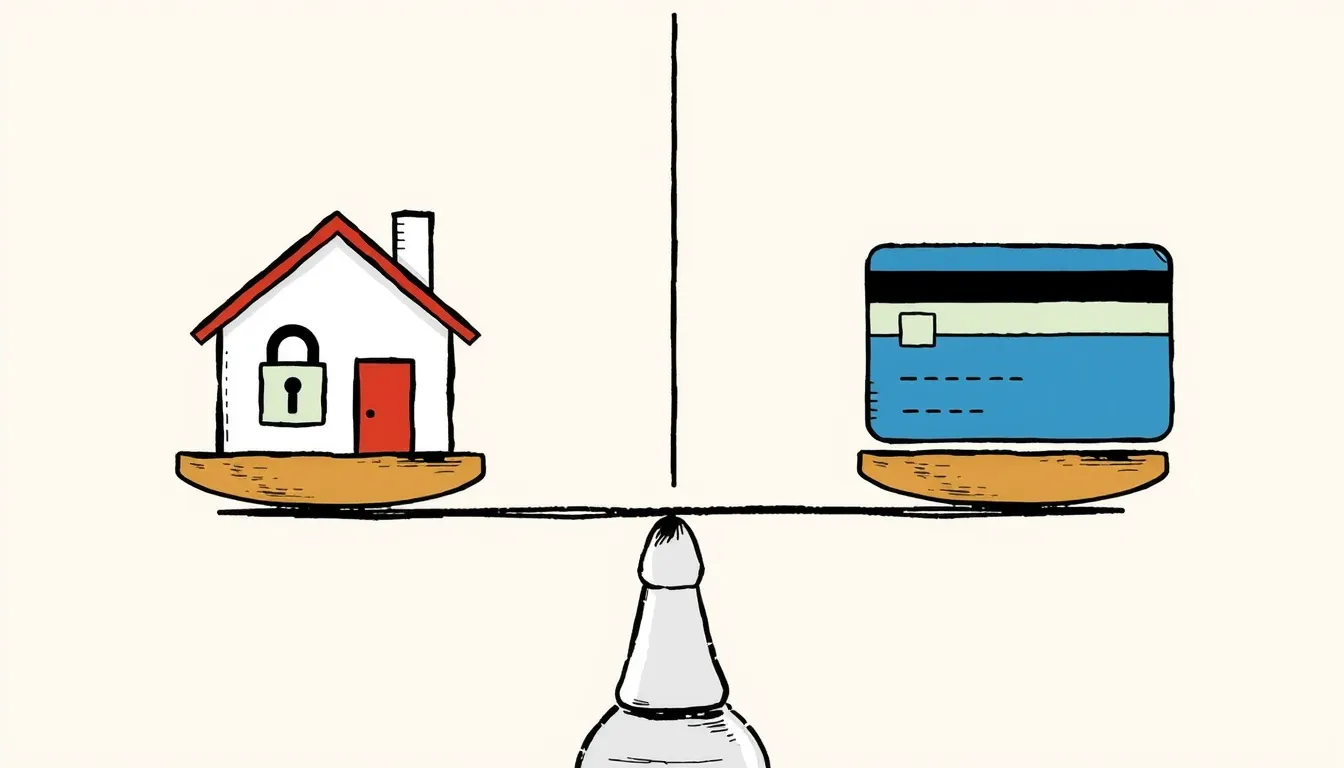
Secured vs. Unsecured Loans Explained begins with a clear definition of each option. A secured loan is backed by collateral—an asset such as a home, car, or savings account that the lender can claim with a lien if you default. Because the risk to the lender is lower, interest rates and the APR are typically more favorable, and loan terms can be longer.
An unsecured loan has no collateral attached. Approval relies mainly on your credit score, income stability, and overall risk exposure. Without an asset to seize, lenders charge higher interest rates and shorter loan terms to offset the greater risk of default.
Typical use cases help you match the loan type to your needs. Secured loans are common for large purchases—mortgages, auto financing, or home‑equity borrowing—where the borrower can offer the purchased item as security. Unsecured loans suit smaller, flexible needs such as debt consolidation, medical expenses, or personal projects where you prefer not to tie up an asset.
Understanding these core differences sets the stage for the next steps: assessing your financial situation, comparing costs, and choosing the loan that aligns with your cash‑flow goals while minimizing exposure to unnecessary risk.
Assess Your Financial Situation and Objectives
Before you decide whether a secured loan or an unsecured loan fits your needs, map out the financial picture that will drive the decision.
- List all assets you could use as collateral. Identify real‑estate, vehicles, or savings accounts that could back a secured loan. Result: You’ll know the maximum loan amount you could obtain with a lien and the risk exposure if you default.
- Record every outstanding debt. Include credit‑card balances, existing loans, and any liens. Result: You can calculate your debt‑to‑income ratio, which lenders use to set the interest rate and APR.
- Check your credit score. Pull a recent report and note any errors. Result: A higher score expands unsecured‑loan options and may lower the APR, while a lower score may push you toward a secured loan that relies more on collateral than credit.
- Define the borrowing purpose and loan term. Write down why you need the money and how long you plan to repay it. Result: The purpose (e.g., debt consolidation vs. home improvement) guides whether flexibility (unsecured) or lower rates (secured) is more important.
Common mistake: Ignoring the impact of a lien on future credit or over‑leveraging assets. Failing to align the loan term with cash‑flow projections can lead to default, harming both credit score and the value of any collateral.
Gather Required Documentation and Check Eligibility
Gathering the right paperwork and confirming you meet the lender’s criteria lets you move from research to a confident application. Follow these actions to stay on track.
- Secure proof of collateral for a secured loan. Collect the title, registration, or deed for the asset you’ll pledge and obtain a recent, professional valuation. Result: The lender can assess the lien value and determine the loan‑to‑value ratio.
- Assemble income documentation for an unsecured loan. Provide recent pay stubs, W‑2s or tax returns, and any self‑employment records. Include a current credit report or authorization for the lender to pull one. Result: The lender evaluates credit score, debt‑to‑income ratio, and overall risk exposure.
- Check eligibility before you apply. Review the lender’s minimum credit score, required debt‑to‑income thresholds, and any asset‑ownership rules. Use the lender’s online pre‑qualification tool or call a loan officer to verify that your documents meet these benchmarks. Result: You avoid unnecessary hard inquiries and wasted effort.
- Common mistake to avoid. Submitting incomplete or outdated documents leads to delays or outright denial. Double‑check that valuations are dated within the last 30 days and that income statements cover the most recent full year.
Compare Costs, Terms, and Risks
Next, line up the monetary and risk factors side‑by‑side so you can see which option fits your budget and tolerance for loss. A secured loan typically offers a lower interest rate and a more favorable APR because the lender can place a lien on your collateral. An unsecured loan lacks that safety net, so lenders compensate with higher rates and often add origination or processing fees. Both loan types vary in loan term length; secured loans may allow longer terms, while unsecured loans are often limited to shorter periods to keep the lender’s exposure manageable.
| Feature | Secured Loan | Unsecured Loan |
|---|---|---|
| Interest Rate | Generally lower | Generally higher |
| APR | Lower, reflects reduced risk | Higher, reflects higher risk |
| Fees | Often fewer or lower | May include application, underwriting, or higher processing fees |
| Loan Term | Can be extended (5‑15 years or more) | Typically shorter (1‑5 years) |
| Risk Exposure | Asset loss if you default (lien can be enforced) | Higher debt burden; no specific asset at risk but credit score impact is greater |
Common mistake: assuming the lower rate of a secured loan automatically makes it the safer choice. If you cannot protect the collateral, the loss of that asset may outweigh the savings on interest. Conversely, taking an unsecured loan without confirming you can manage the higher monthly payment can lead to rapid risk exposure and credit damage.
Select the Appropriate Loan and Prepare a Complete Application
Follow this concise checklist to move from analysis to a confident loan submission. Each action produces a tangible result, keeping the process on track and reducing the chance of a missed detail.
- Choose the loan type that matches your risk exposure. Decide whether a secured loan (with collateral and a possible lien) or an unsecured loan (no collateral, higher interest rate) best fits your goals. Result: a clear direction for the rest of the application.
- Calculate the affordable payment. Use your budget, the loan term, and the expected APR to determine the maximum monthly amount you can sustain without risking default. Result: a realistic payment figure that guides the amount you request.
- Gather required documentation. Assemble recent pay stubs, tax returns, proof of collateral (if applicable), and a credit‑score report. Result: a complete document packet ready for upload.
- Complete the lender’s application. Fill every field accurately, reference the chosen loan type, and double‑check figures for interest rate and APR. Result: a polished application that reflects your financial picture.
- Anticipate the lender’s review. Prepare for possible follow‑up requests—additional proof of income, collateral valuation, or clarification of credit‑score factors. Result: smoother underwriting and a faster decision.
Common mistake: submitting an incomplete application or overlooking a required document, which often leads to delays or a denied request. Double‑check each step before you hit “submit” to keep the process moving.
Avoid Common Mistakes During the Decision and Application Process
Even after polishing your paperwork, a handful of easy‑to‑overlook pitfalls can turn a solid plan into a costly setback. Spotting these errors early keeps your loan choice aligned with your financial goals.
- Ignoring the total cost of borrowing. Focusing only on the monthly payment can hide a high APR or hidden fees that inflate the overall expense. Prevention: Calculate the full repayment amount, including interest, fees, and any early‑payoff penalties, before committing.
- Over‑leveraging collateral. Using a valuable asset as security for a large loan can expose you to a lien that threatens your long‑term stability. Prevention: Match the loan amount to a realistic portion of the collateral’s equity and consider whether a smaller unsecured loan might carry less risk.
- Misreading fine print. Subtle clauses—such as variable‑rate triggers or default provisions—can change the loan’s risk profile. Prevention: Read every clause, highlight terms you don’t understand, and ask the lender to clarify before signing.
- Skipping pre‑approval. Applying directly without a pre‑approval check often leads to surprise rejections or unfavorable terms. Prevention: Secure a pre‑approval to gauge eligibility, lock in rates, and strengthen your negotiating position.